JPMP_PAYMENT_OUTLOOKS_EUROPE_FINAL
by JPMorgan
1 EUROPEPAYMENTS OUTLOOK PAYMENTS OUTLOOK EUROPE Market sovereignty meets flexibility

2 Contents CHAPTER 1INTRODUCTION CHAPTER 2 CHAPTER 3 CHAPTER 4 LOOKING AHEAD: SOVEREIGNTY, CONTINUITY AND FLEXIBILITY FOR A REGION IN TRANSITION CONTRIBUTING EXPERTS REFERENCES Blockchain-powered treasury Creating control with digital payments Customized payments ecosystems Building flexible technology stacks Sovereignty and security The digital euro, regulation and AI-driven control Cashflow resilience Liquidity, supply chain risk and the new working capital imperative7 11 16 22 28 29 304

4 Introduction While the European payments industry is shifting toward stronger regulation, closer integration and strategic autonomy, companies in the region are seeking more operational flexibility than ever to respond to a challenging market environment. At a regional level, European Union (EU) directives and regulatory frameworks are increasing compliance and risk controls, while the European Central Bank (ECB) looks to drive greater payments sovereignty through the creation of the digital euro, and the European Digital ID (EUDI) Wallet promises to improve security. Although these changes create an added burden for companies, they could also enhance consumer trust and confidence. Meanwhile, organizations are increasingly focused on flexible liquidity and real-time, always-on payments to help them create control and respond to market shifts. Treasury teams are adopting blockchain for its ability to move funds quickly and securely across borders, while companies reshape working capital and trade finance to tap into funds quickly and finance capital-intensive AI investment. Growing collaboration between banks and fintechs is delivering on this desire for greater flexibility. This is giving clients more freedom than ever to design payments systems that meet their precise needs—an opportunity that organizations across Europe are seizing. Using proprietary J.P. Morgan research and the expertise of our local payments advisors, this report looks deeper into these shifts to explore what’s ahead for Europe’s payments landscape.PAYMENTS OUTLOOK: EUROPE
5 Four shifts powering payments in Europe
- BLOCKCHAIN-POWERED TREASURY Creating control with digital payments
- CUSTOMIZED PAYMENTS ECOSYSTEMS Building flexible technology stacks
- SOVEREIGNTY AND SECURITY The digital euro, regulation and AI-driven control
- CASHFLOW RESILIENCE Managing liquidity, risk and the new working capital imperativePAYMENTS OUTLOOK: EUROPE
6Technology will be key to achieving greater visibility, control and resilience in an increasingly complex European payments landscape.
BLOCKCHAIN- POWERED TREASURY1 Creating control with digital payments BLOCKCHAIN- POWERED TREASURY

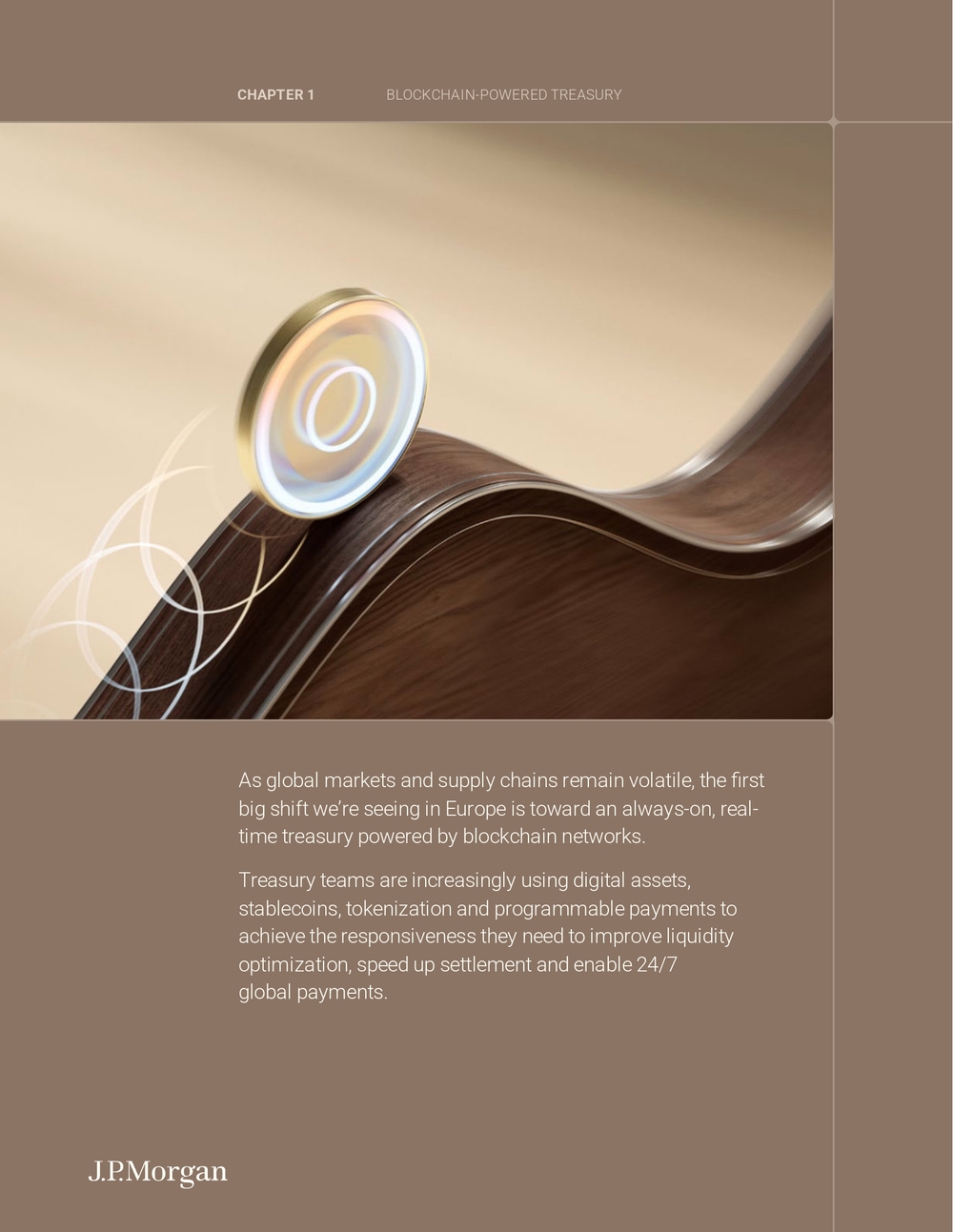
8 CHAPTER 1 BLOCKCHAIN-POWERED TREASURY As global markets and supply chains remain volatile, the first big shift we’re seeing in Europe is toward an always-on, real- time treasury powered by blockchain networks. Treasury teams are increasingly using digital assets, stablecoins, tokenization and programmable payments to achieve the responsiveness they need to improve liquidity optimization, speed up settlement and enable 24/7 global payments.
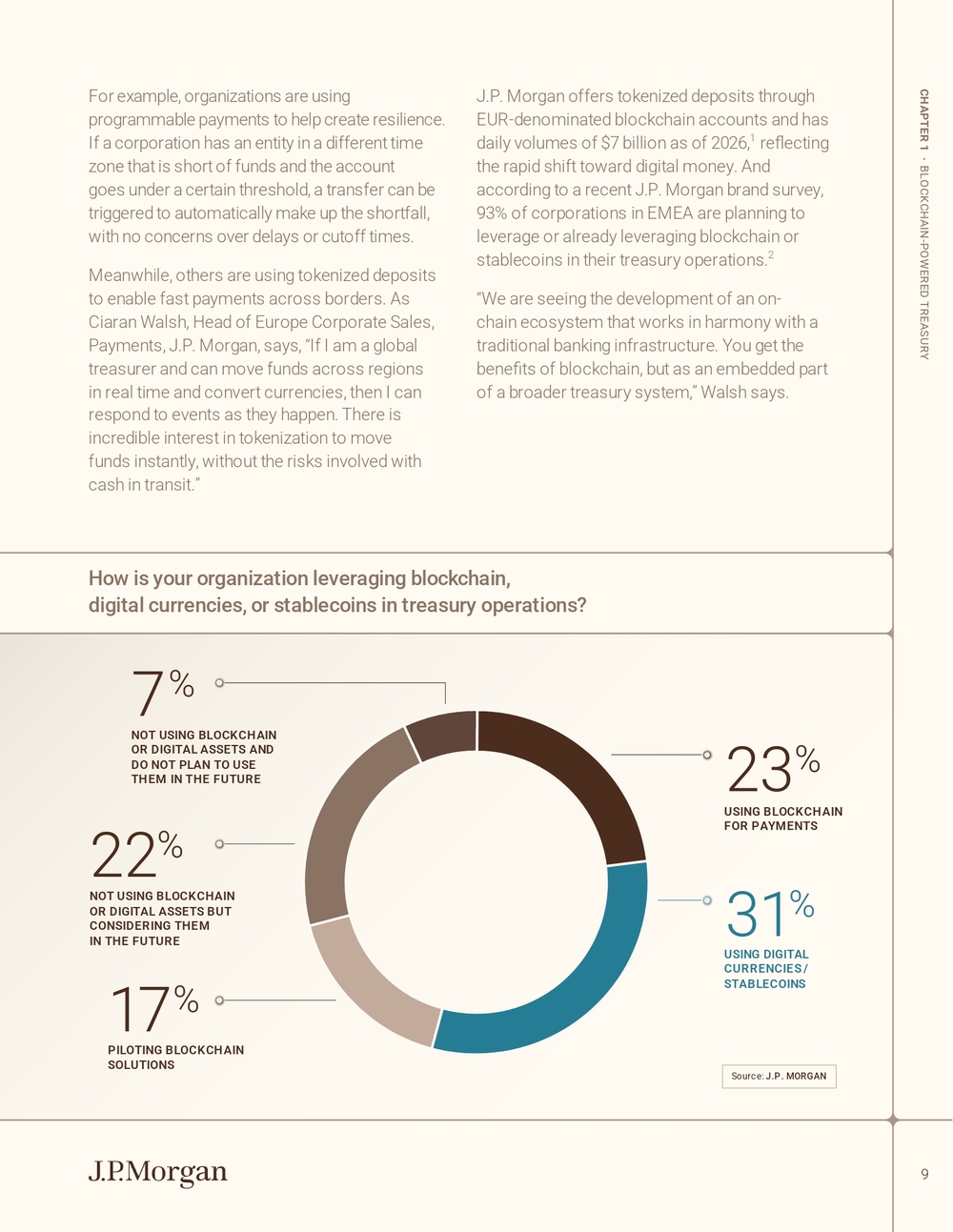
9 23% USING BLOCKCHAIN FOR PAYMENTS 31% USING DIGITAL CURRENCIE S/ STABLECOINS7% NOT USING BLOCKCHAIN OR DIGITAL ASSETS AND DO NOT PLAN TO USE THEM IN THE FUTURE 22% NOT USING BLOCKCHAIN OR DIGITAL ASSETS BUT CONSIDERING THEM IN THE FUTURE 17% PILOTING BLOCKCHAIN SOLUTIONSFor example, organizations are using programmable payments to help create resilience. If a corporation has an entity in a different time zone that is short of funds and the account goes under a certain threshold, a transfer can be triggered to automatically make up the shortfall, with no concerns over delays or cutoff times. Meanwhile, others are using tokenized deposits to enable fast payments across borders. As Ciaran Walsh, Head of Europe Corporate Sales, Payments, J.P. Morgan, says, “If I am a global treasurer and can move funds across regions in real time and convert currencies, then I can respond to events as they happen. There is incredible interest in tokenization to move funds instantly, without the risks involved with cash in transit.”J.P. Morgan offers tokenized deposits through EUR-denominated blockchain accounts and has daily volumes of $7 billion as of 2026,1 reflecting the rapid shift toward digital money. And according to a recent J.P. Morgan brand survey, 93% of corporations in EMEA are planning to leverage or already leveraging blockchain or stablecoins in their treasury operations.2 “We are seeing the development of an on- chain ecosystem that works in harmony with a traditional banking infrastructure. You get the benefits of blockchain, but as an embedded part of a broader treasury system,” Walsh says. Source: J.P. MORGANHow is your organization leveraging blockchain, digital currencies, or stablecoins in treasury operations?CHAPTER 1 · BLOCKCHAIN-POWERED TREASURY
“We are seeing the development of an on-chain ecosystem that works in harmony with a traditional banking infrastructure. You get the benefits of blockchain, but as an embedded part of a broader treasury system.” Ciaran Walsh HEAD OF EUROPE CORPORATE SALES, PAYMENTS, J.P. MORGAN

CUSTOMIZED PAYMENTS ECOSYSTEMS2 Building flexible technology stacks CUSTOMIZED PAYMENTS ECOSYSTEMS

12 Organizations in Europe are benefiting from greater flexibility and enhanced business outcomes as the traditional divide between fintechs and big banks evolves into a more collaborative landscape.CHAPTER 2 CUSTOMIZED PAYMENTS ECOSYSTEMS

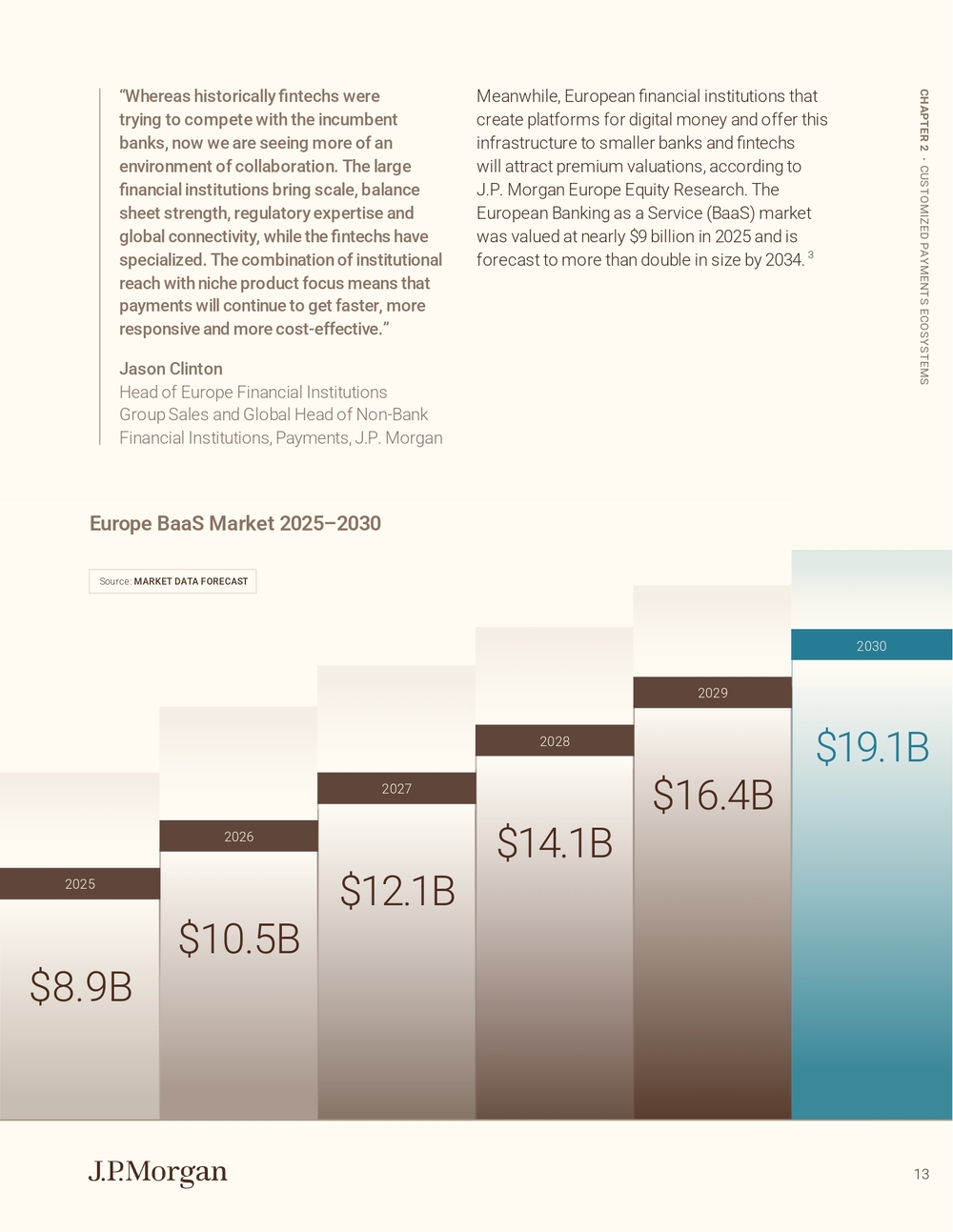
13 2025 $8.9B Europe BaaS Market 2025 –2030 Source: MARKET DATA FORECAST $10.5B2026 $12.1B2027 $14.1B2028 $16.4B2029 $19.1B2030“Whereas historically fintechs were trying to compete with the incumbent banks, now we are seeing more of an environment of collaboration. The large financial institutions bring scale, balance sheet strength, regulatory expertise and global connectivity, while the fintechs have specialized. The combination of institutional reach with niche product focus means that payments will continue to get faster, more responsive and more cost-effective.” Jason Clinton Head of Europe Financial Institutions Group Sales and Global Head of Non-Bank Financial Institutions, Payments, J.P. MorganMeanwhile, European financial institutions that create platforms for digital money and offer this infrastructure to smaller banks and fintechs will attract premium valuations, according to J.P. Morgan Europe Equity Research. The European Banking as a Service (BaaS) market was valued at nearly $9 billion in 2025 and is forecast to more than double in size by 2034.3CHAPTER 2 · CUSTOMIZED PAYMENTS ECOSYSTEMS
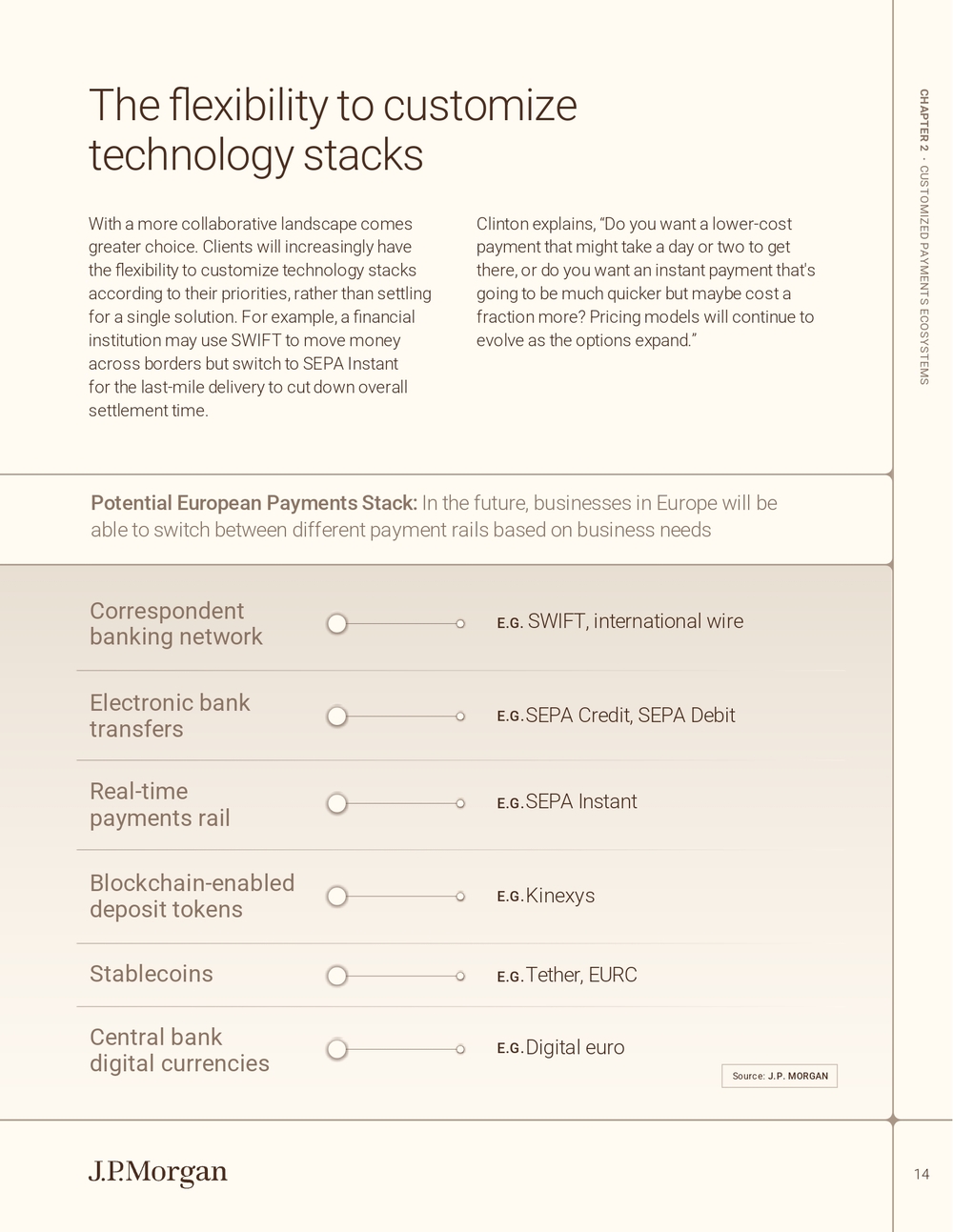
14 Real-time payments rail Central bank digital currencies Electronic bank transfers StablecoinsCorrespondent banking network Blockchain-enabled deposit tokensE.G. SWIFT, international wire E.G. SEPA Credit, SEPA Debit E.G. SEPA Instant E.G. Kinexys E.G. Tether, EURC E.G. Digital euro Source: J.P. MORGANThe flexibility to customize technology stacks With a more collaborative landscape comes greater choice. Clients will increasingly have the flexibility to customize technology stacks according to their priorities, rather than settling for a single solution. For example, a financial institution may use SWIFT to move money across borders but switch to SEPA Instant for the last-mile delivery to cut down overall settlement time. Clinton explains, “Do you want a lower-cost payment that might take a day or two to get there, or do you want an instant payment that's going to be much quicker but maybe cost a fraction more? Pricing models will continue to evolve as the options expand.” Potential European Payments Stack: In the future, businesses in Europe will be able to switch between different payment rails based on business needsCHAPTER 2 · CUSTOMIZED PAYMENTS ECOSYSTEMS
15 15Clients will increasingly have the flexibility to customize technology stacks according to their priorities, rather than settling for a single solution.
SOVEREIGNTY AND SECURITY3 The digital euro, regulation and AI-driven control CONNECTED TREASURY SOVEREIGNTY AND SECURITY

17 Regulatory and compliance complexity is intensifying throughout Europe. Operational demands on corporates are increasing thanks to the need for greater payments sovereignty and the EU’s Payment Services Directive 3 (PSD3), as well as stricter sanctions regimes and safeguarding requirements.CHAPTER 3 SOVEREIGNTY AND SECURITY

18 Creating payments sovereignty with the digital euro With European policymakers concerned about the region’s dependence on foreign technology, especially for critical infrastructure like payments, the regulatory agenda is focused on payments sovereignty and strategic autonomy. As a result, the ECB is developing a digital version of the euro. “There is also a political driver for the digital euro: sovereignty—ensuring that the European population can make payments independently of other global payment methods. But success will depend on whether the ECB can make it attractive to users.” Katja Lehr Europe Product Head and EMEA Payments Industry Advocate Lead, J.P. Morgan As a result, the digital euro is expected to have lower transaction fees than traditional card networks, which should encourage uptake. “Merchants are going to be driven by the pricing. If the digital euro is cheaper for them to accept compared to other payment methods, then they will push it with consumers,” Lehr explains. The digital euro could also help create continuity across a fragmented payments landscape, making it easier to transact across borders, speed up settlement and automate reconciliation.CHAPTER 3 · SOVEREIGNTY AND SECURITY
19 The arrival of the EUDI Wallet With the global cost of cybercrime reaching $10.5 trillion in 2025,4 trust and security are a major focus for European regulators and business leaders alike. According to J.P. Morgan data, 40% of EMEA organizations are concerned or very concerned about payments fraud in the next 12 months.5 These concerns will be addressed in part by the EUDI Wallet. Due to launch by the end of 2026,67 the wallet will be a secure form of digital ID that will enable citizens to verify their identity for online transactions.8 “Digital identity is not a digital version of your passport. The new regulation introduces a wallet that can become a repository of a potentially infinite set of credentials, from your driver’s license to your academic background to your financial credit scores.” Andrea Monteleone EMEA Payments Industry Advocacy Director, J.P. MorganThe EUDI Wallet will enable consumers to authorize payments using multifactor authentication including biometrics and behavioral analysis (e.g. geographic location, usage patterns or typing cadence). This reflects a wider European move to combat rising fraud by supplementing existing verification controls with more sophisticated behavioral data. For merchants, the EUDI Wallet could also offer an opportunity to simplify customer journeys and reduce friction. Monteleone explains: “This could potentially streamline a lot of user experiences. Say that you want to rent a car— there could be a solution that securely leverages the information from your digital identity wallet to reduce the steps in a checkout flow.” He adds, “Digital identity can be leveraged in Europe to add value, not just to comply.”CHAPTER 3 · SOVEREIGNTY AND SECURITY
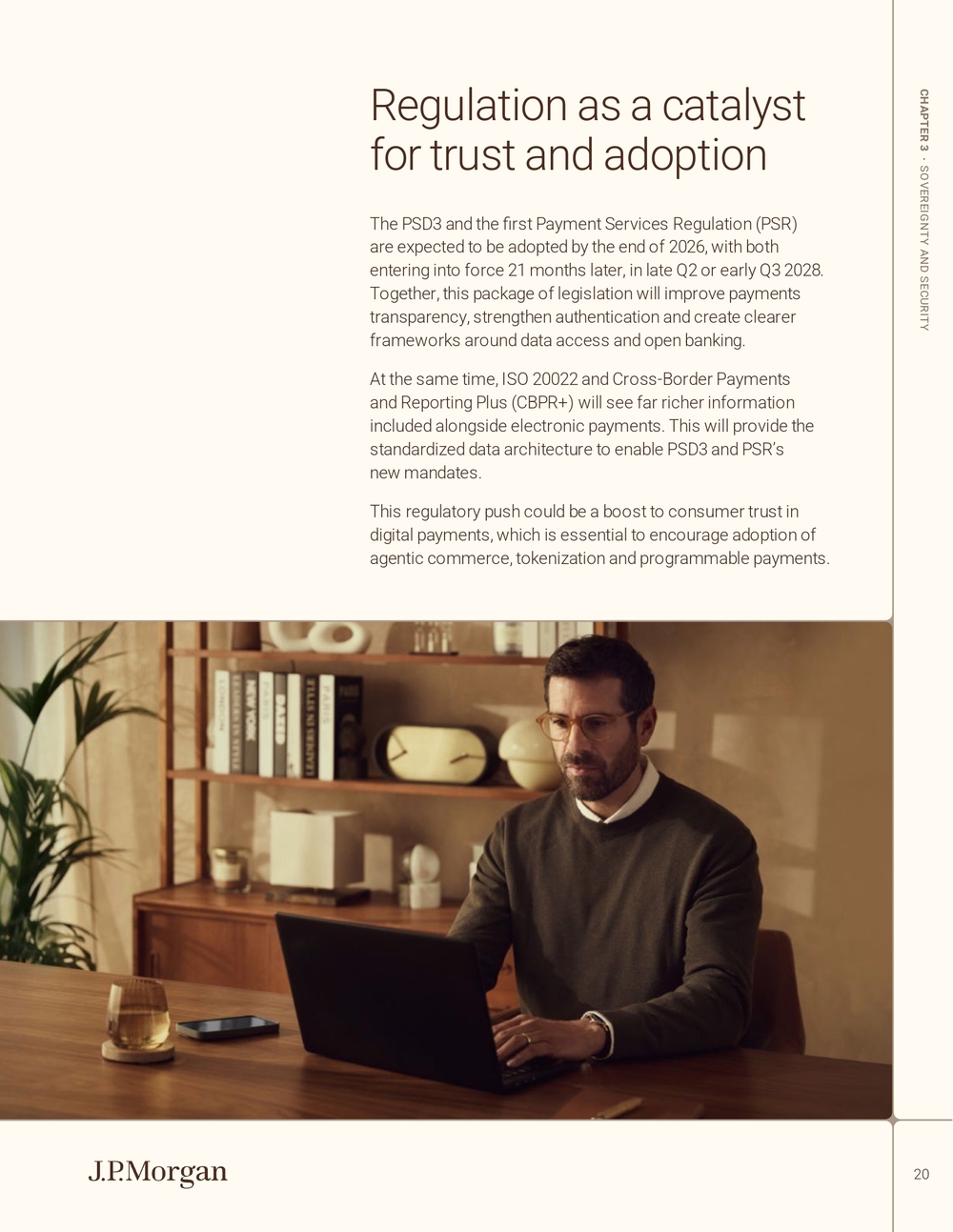
20 Regulation as a catalyst for trust and adoption The PSD3 and the first Payment Services Regulation (PSR) are expected to be adopted by the end of 2026, with both entering into force 21 months later, in late Q2 or early Q3 2028. Together, this package of legislation will improve payments transparency, strengthen authentication and create clearer frameworks around data access and open banking. At the same time, ISO 20022 and Cross-Border Payments and Reporting Plus (CBPR+) will see far richer information included alongside electronic payments. This will provide the standardized data architecture to enable PSD3 and PSR’s new mandates. This regulatory push could be a boost to consumer trust in digital payments, which is essential to encourage adoption of agentic commerce, tokenization and programmable payments.CHAPTER 3 · SOVEREIGNTY AND SECURITY
21 CHAPTER 3 · SOVEREIGNTY AND SECURITY Using AI for sanctions and compliance control With anti-money laundering and sanctions compliance evolving rapidly amid geopolitical tensions, financial institutions are investing in screening, monitoring and governance capabilities. Organizations are using AI in areas such as beneficial ownership to help map complex ownership structures and uncover the ultimate beneficiaries of transactions. As well as scanning corporate registries and comparing data, AI is being used to analyze social media to discover potential connections between people and identify intermediaries and indirect ownership links. As AI becomes more central to financial institutions in Europe, success in this space will depend on data quality and governance. European regulators are imposing strict requirements around data localization, privacy and transparency. A key focus is explainability. Companies won’t be able to just feed data to regulators. They will have to demonstrate that they understand the AI model, understand the source of the information and can explain and predict the outputs. According to Clinton, “For financial institutions, the challenge will be scaling innovation while also keeping a very strong control framework.”
CASHFLOW RESILIENCE 4 Liquidity, supply chain risk and the new working capital imperative CASHFLOW RESILIENCE

23 Europe is facing a challenging operating environment. Geopolitical conflict is causing disruption to energy supplies and commodity exports, while the wider trend toward tariffs and deglobalization is impacting supply chains and resulting in more stockpiling of essential goods. At the same time, there is massive demand for working capital to finance the huge capital expenditure (capex) boom as Europe builds out its AI data center infrastructure.CHAPTER 4 CASHFLOW RESILIENCE

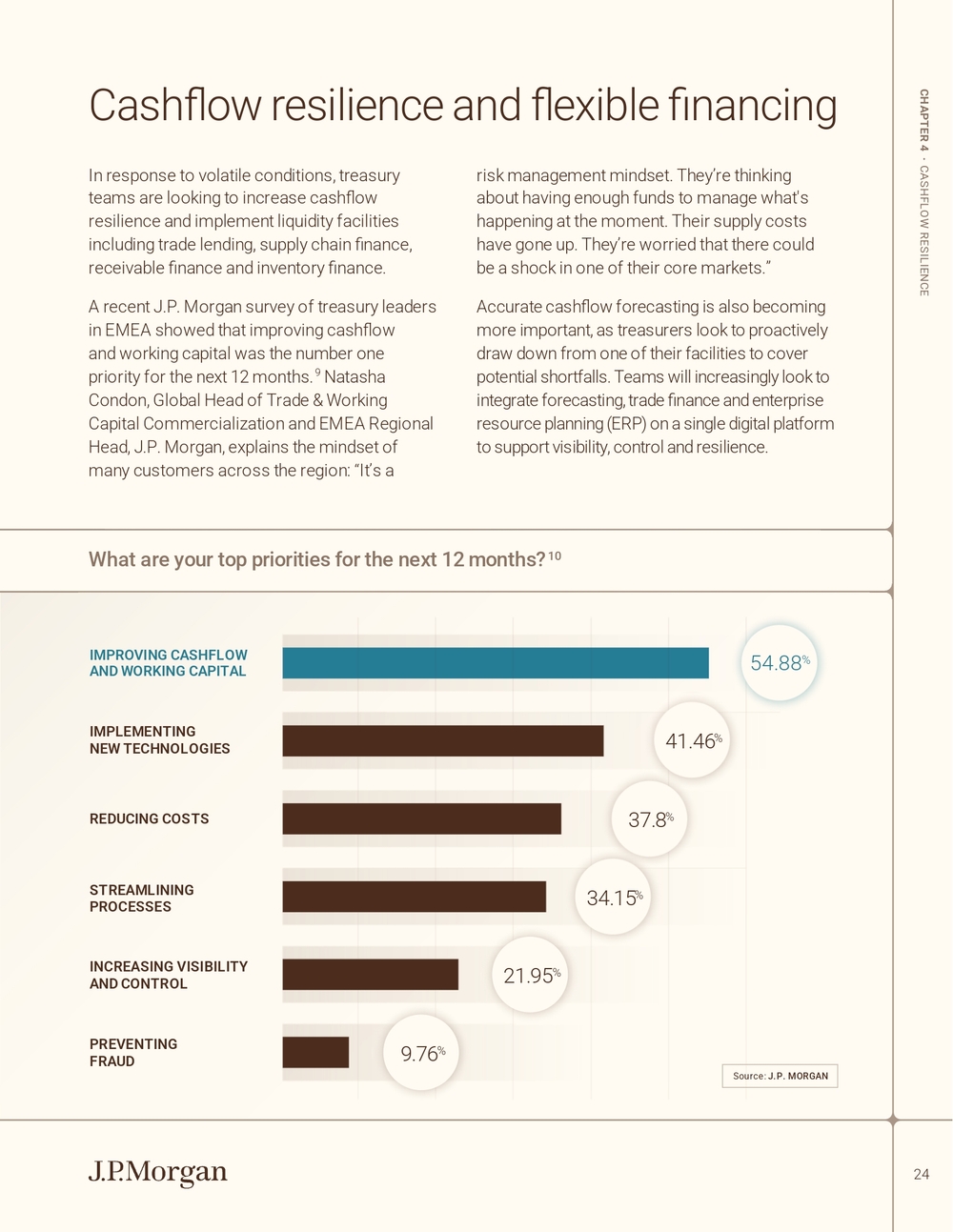
24 IMPROVING CASHFLOW AND WORKING CAPITAL IMPLEMENTING NEW TECHNOLOGIES REDUCING COSTS STREAMLINING PROCESSES INCREASING VISIBILITY AND CONTROL PREVENTING FRAUD 54.88% 41.46% 37.8% 34.15% 21.95% 9.76%Cashflow resilience and flexible financing In response to volatile conditions, treasury teams are looking to increase cashflow resilience and implement liquidity facilities including trade lending, supply chain finance, receivable finance and inventory finance. A recent J.P. Morgan survey of treasury leaders in EMEA showed that improving cashflow and working capital was the number one priority for the next 12 months.9 Natasha Condon, Global Head of Trade & Working Capital Commercialization and EMEA Regional Head, J.P. Morgan, explains the mindset of many customers across the region: “It’s a risk management mindset. They’re thinking about having enough funds to manage what's happening at the moment. Their supply costs have gone up. They’re worried that there could be a shock in one of their core markets.” Accurate cashflow forecasting is also becoming more important, as treasurers look to proactively draw down from one of their facilities to cover potential shortfalls. Teams will increasingly look to integrate forecasting, trade finance and enterprise resource planning (ERP) on a single digital platform to support visibility, control and resilience.CHAPTER 4 · CASHFLOW RESILIENCE Source: J.P. MORGANWhat are your top priorities for the next 12 months?10
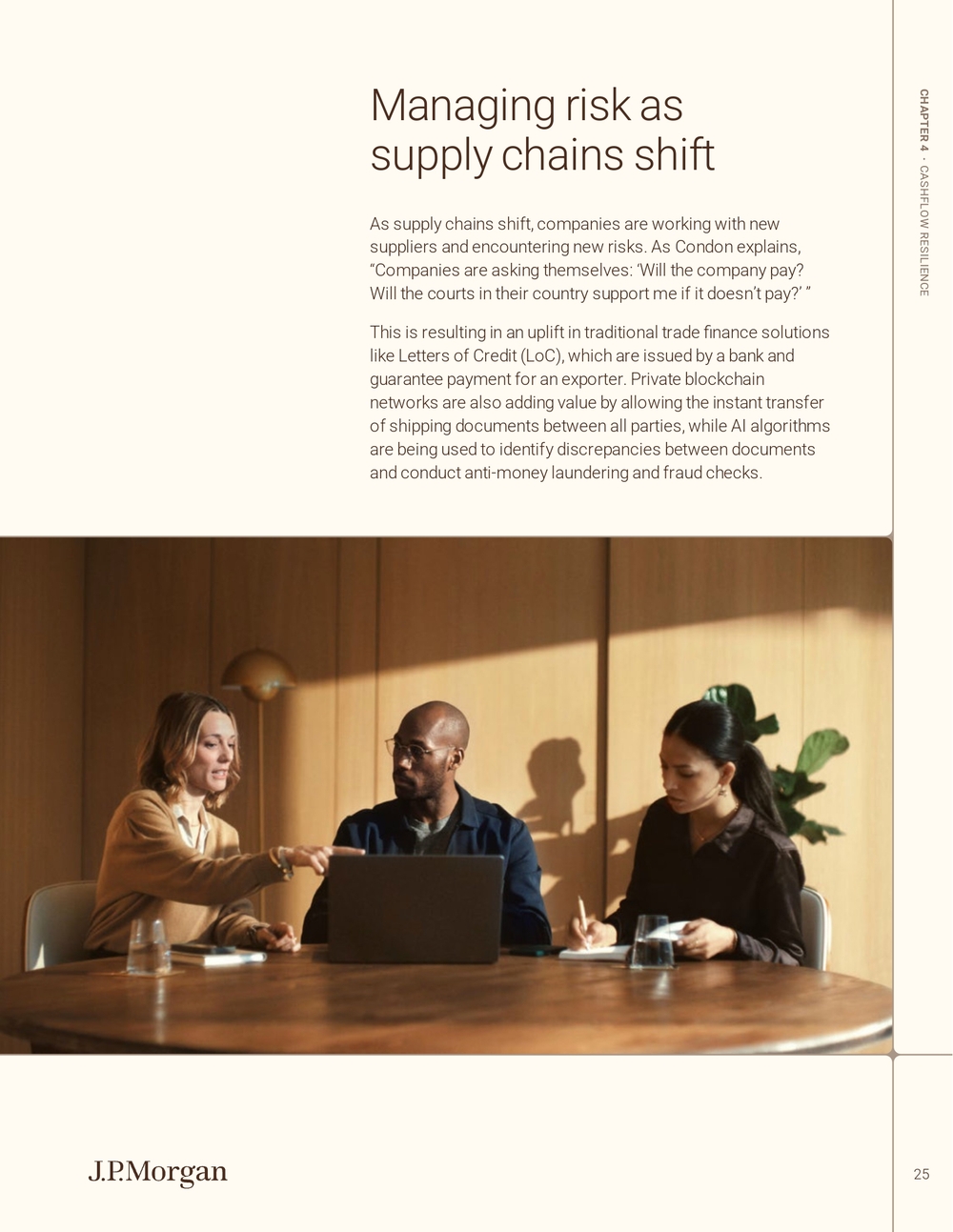
25 Managing risk as supply chains shift As supply chains shift, companies are working with new suppliers and encountering new risks. As Condon explains, “Companies are asking themselves: ‘Will the company pay? Will the courts in their country support me if it doesn’t pay?’ ” This is resulting in an uplift in traditional trade finance solutions like Letters of Credit (LoC), which are issued by a bank and guarantee payment for an exporter. Private blockchain networks are also adding value by allowing the instant transfer of shipping documents between all parties, while AI algorithms are being used to identify discrepancies between documents and conduct anti-money laundering and fraud checks.CHAPTER 4 · CASHFLOW RESILIENCE
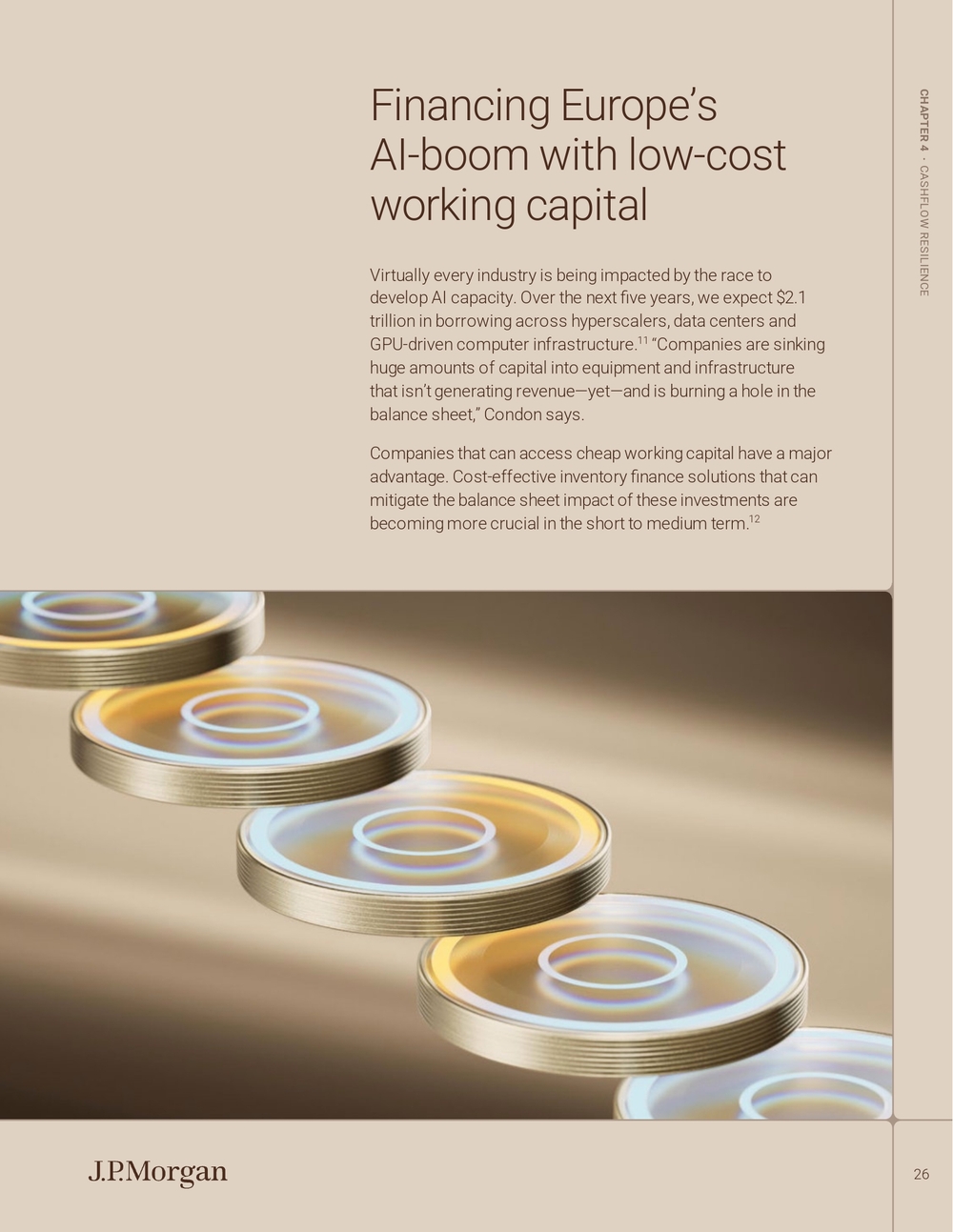
26Financing Europe’s AI-boom with low-cost working capital Virtually every industry is being impacted by the race to develop AI capacity. Over the next five years, we expect $2.1 trillion in borrowing across hyperscalers, data centers and GPU-driven computer infrastructure.11 “Companies are sinking huge amounts of capital into equipment and infrastructure that isn’t generating revenue—yet—and is burning a hole in the balance sheet,” Condon says. Companies that can access cheap working capital have a major advantage. Cost-effective inventory finance solutions that can mitigate the balance sheet impact of these investments are becoming more crucial in the short to medium term.12 CHAPTER 4 · CASHFLOW RESILIENCE

28Looking ahead: Sovereignty, continuity and flexibility for a region in transition The introduction of PSD3, the PSR, the EUDI Wallet and the digital euro all signals Europe’s intent to increase autonomy and sovereignty, and enhance regional continuity and security in payments. While these may help strengthen the market, the region’s inherent complexities and current operational challenges mean it remains a demanding environment to operate within. In response, companies are integrating greater flexibility and control in treasury and payments systems, largely through blockchain capabilities and customizable technology stacks. With systems designed to meet their specific priorities, companies are unlocking always-on cross-border payments, improving liquidity optimization and building cashflow resilience. Meanwhile, access to low-cost working capital is emerging as a core competitive advantage, and we expect to see further innovation in this space, such as digital platforms and automated decisioning that support flexible liquidity in the coming years. Learn more about how J.P. Morgan can help clients navigate the complexity of European markets, while supporting wider global operations.PAYMENTS OUTLOOK: EUROPE
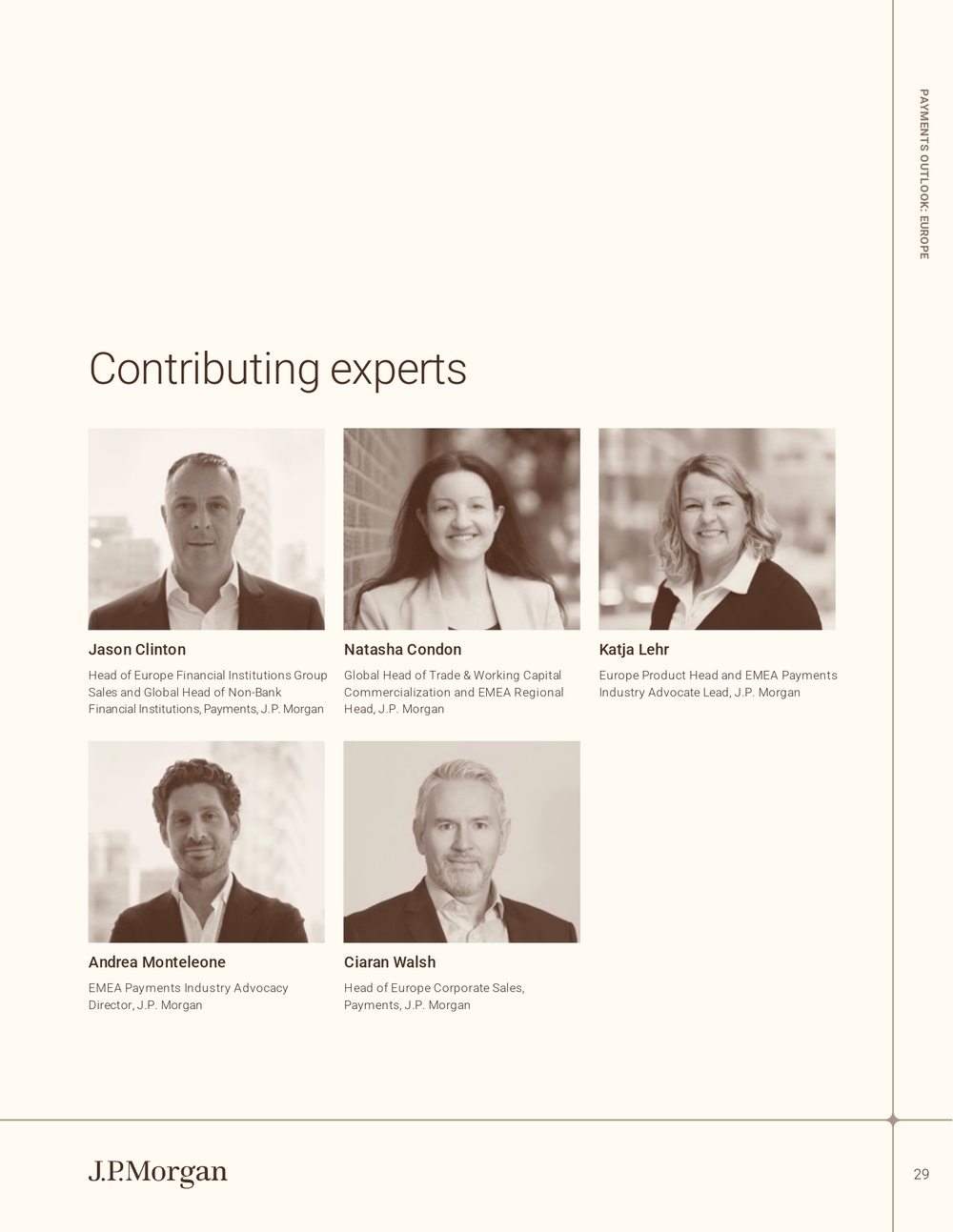
29 PAYMENTS OUTLOOK: EUROPE Contributing experts Jason Clinton Head of Europe Financial Institutions Group Sales and Global Head of Non-Bank Financial Institutions, Payments, J.P. Morgan Andrea Monteleone EMEA Payments Industry Advocacy Director, J.P. MorganNatasha Condon Global Head of Trade & Working Capital Commercialization and EMEA Regional Head, J.P. Morgan Ciaran Walsh Head of Europe Corporate Sales, Payments, J.P. MorganKatja Lehr Europe Product Head and EMEA Payments Industry Advocate Lead, J.P. Morgan
30
- Kinexys by J.P. Morgan. Available at: https://www.jpmorgan.com/kinexys/index . Accessed June 2026.
- J.P. Morgan/AIM
- Market Data Forecast, February 2026. “Europe Banking as a Service Market Report.” Available at: https://www.marketdataforecast.com/ market-reports/europe-banking-as-a-service- market . Accessed July 2026
- J.P. Morgan Strategic Research, November
- “J.P. Morgan Perspectives: Digital Future Under Threat: AI, Quantum and Geopolitical Cybersecurity Risks.” Accessed February 2026; Cobalt, “Top Cybersecurity Statistics for 2025.” Accessed March 2026.
- J.P. Morgan research
- European Commission, September 2025. “Data Act”. Available at: https://digital-strategy. ec.europa.eu/en/policies/data-act . Accessed August 2026.
- European Commission, “eIDAS Regulation”. Available at: https://digital-strategy.ec.europa. eu/en/policies/eidas-regulation . Accessed February 2026
- Deutsche Welle, June 2023. “EU confirms digital euro plans with draft bill.” Available at: https://www.dw.com/en/digital-euro- the-european-union-moves-ahead-with-its- currency-plans/a-66042345 . Accessed August
- J.P. Morgan, July 2026. “Treasurers in Europe shift priorities: Polling data highlights evolving strategies amid volatility.” Available at: https:// www.jpmorgan.com/insights/banking/emea- treasurers-outlook . Accessed July 202610. J.P. Morgan, July 2026. “Treasurers in Europe shift priorities: Polling data highlights evolving strategies amid volatility.” Available at: https://www.jpmorgan.com/insights/banking/ emea-treasurers-outlook . Accessed July 2026.
- J.P. Morgan, North America Fundamental Research, June 2026, “AI Capex 2.0. If You Build It, They Will Finance It - Updated Growth & Capital Markets Forecasts.” Accessed June
- J.P. Morgan, North America Fundamental Research, June 2026, “AI Capex 2.0. If You Build It, They Will Finance It - Updated Growth & Capital Markets Forecasts.” Accessed June 2026.ReferencesPAYMENTS OUTLOOK: EUROPE