631975-1-SEP26-Climate Intuition Guide for talking to Boards about Resilience-v3
by JPMorgan
1 A guide to enabling resilience discussions for board directors
2 Resiliency can be both a material cost and a credible source of strategic advantage. Done well, resilience-focused scenario planning is a tool that can be used to strengthen strategic decision-making, surface innovation and opportunity at an earlier stage, improve resource allocation and support clearer, more credible communication with stakeholders. Boards oversee many matters that touch on the topic of resilience. These matters may be abstract, long dated, and increasingly more likely; or without precedent, requiring long-term strategic thinking and planning. Behavioral science — the multi-disciplinary study of how psychology impacts decisions and behavior — reveals that people may struggle with planning for such eventualities, making it difficult to begin conversations. Shorter-term concrete problems frequently take precedence, delaying discussion of longer-term threats and opportunities in the absence of pressure to have such conversations. Examples of this have been illustrated in decisions related to healthcare,i emergency managementii and personal finance.iii Even though people may believe they are behaving rationally, sometimes they do not. This is where behavioral science can help facilitate discussions on resilience. This paper is intended to help enable strategic board level discussions — in this case, around the complex and challenging topic of increasing a company’s resilience against unknown future shocks and incomplete information. Resilience can be a strategic investment opportunity that can yield financial benefits over time and help prevent economic losses from an event or missed opportunity.iv Executive Summary
3Defining resilience For this paper, “resilience” is defined as the capacity to recover from disruptions to normal operating conditions. This does not mean routine deviations; it means infrequent but consequential shocks. These are events that arrive every few years or even decades, or emerging risks with an uncertain arrival date and growing probability of occurrence. And it is that uncertainty, as well as the lack of fair warning, that may act as a barrier to action. For company leaders and boards, the central question therefore is not whether management can predict the next shock. It is whether the organization has built an appropriate warning system and the capacity to absorb, adapt to and recover from the shock, without being forced into costly improvisation under pressure when disruption hits. For example, a company’s resilience planning can draw from both emergency management and military strategy. • In emergency management for natural hazards, it is better to identify risks and exposures and to prepare resilience actions — like flood control and evacuation plans — before an event occurs, rather than while it is taking place. This avoids the proverbial problem of trying to “build the plane while flying it.” • In military strategy and decision-making under deep uncertainty, participants develop scenarios for a growing probability risk and/or unknown arrival date of a negative event. Through the exploration of various solution sets, a course of action is determined for optimized outcomes.v This planning takes place because the downside can be avoided with advance planning and this encourages a discussion of resilience. Some recent conversations with clients have included discussion of a number of threats, both separate and coincident. Companies may benefit from detailed resilience planning when addressing these threats, which include: • Geopolitical confrontation • AI impacts on operations, work and the workforce • Cybersecurity • Extreme weather events and climate change
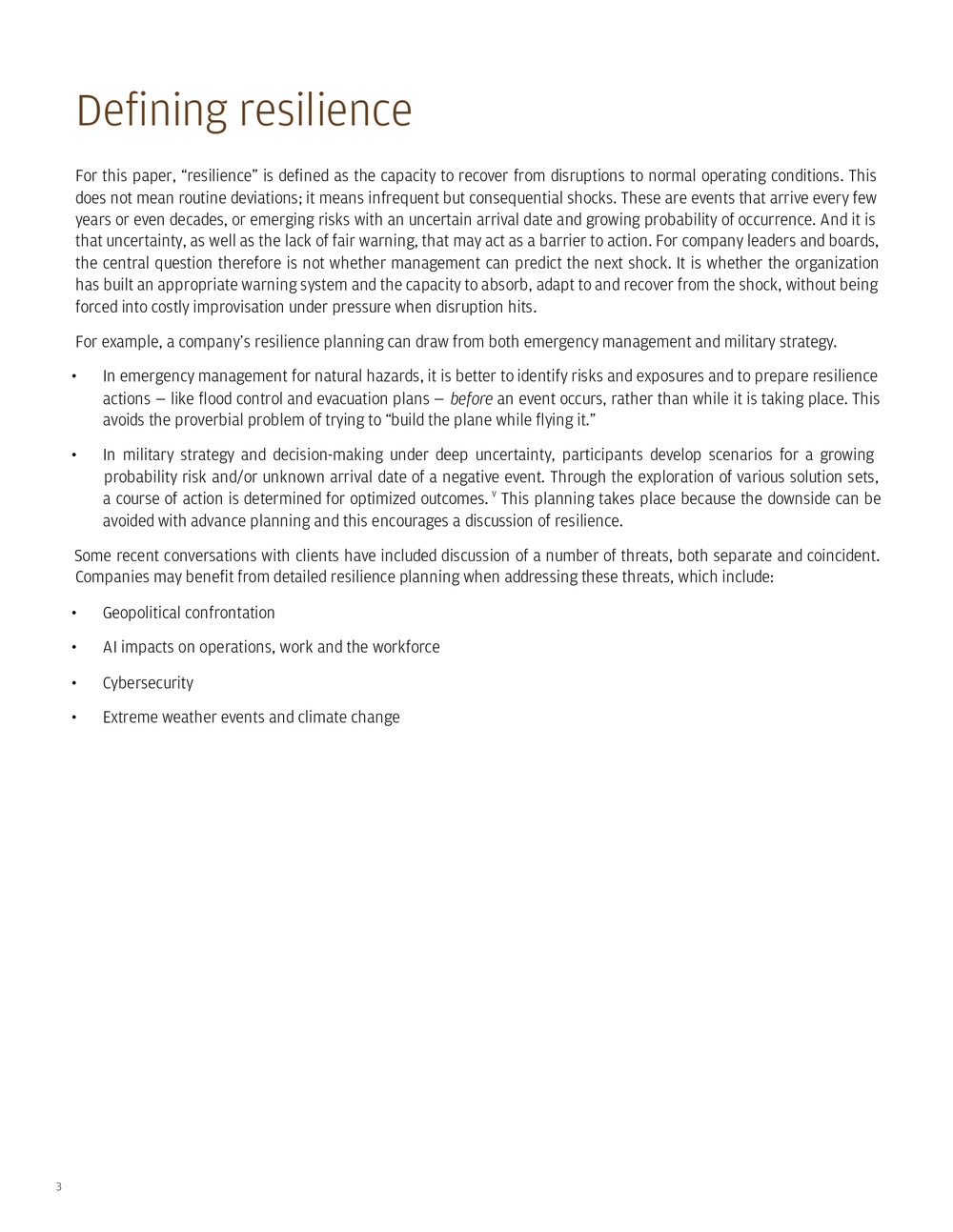
4 All of these topics also map onto the current global risk perception survey released by the World Economic Forum in January 2026. This survey was prescient; in the months since its release, the world experienced the closure of the Strait of Hormuzvi, AI cybersecurity breachesvii and extreme heat and droughtsviii, all of which affected soft commodities, supply chains and energy production.ix, x Sources: World Economic Forum Global Risks Perception Survey 2025–2026 ( link) | Notes: survey of 1,300+ experts across academia, business, government, international organizations and civil society, conducted August–September 2025 People generally process risk in two different ways: • A fast, emotional threat response that is survival-focused, defensive and short-term. • A slower, cognitive mode that supports analytical, scenario-based decision-making.xi The challenge is that the first and initial cognitive response may crowd out the more thoughtful second one, especially under pressure. The discussion can then slip into debate, avoidance or false certainty. Shocks and fast-moving events can intensify this dynamic, pulling a group discussion toward instinctive reactions. This risk may be lessened if decision-makers have already done the strategic work to anticipate scenarios and develop a set of options. That is why a deliberate, well-framed resilience discussion, supported by a readiness plan, can serve as a governance tool in its own right. When disruption hits, preparation can help company leadership avoid reflexive reactions and stay in strategic mode to assess exposures, identify choices and make decisions that safeguard enterprise performance.Why discussing resilience matters
5A productive conversation about resilience may not be possible if the topic is introduced as a distant, abstract future concern. A better way to encourage honest feedback, deep engagement and productive dialogue is to start with what is already impacting the operating environment, such as greater volatility and a wider range of potential disruptions. When disruption occurs, it often shows up through practical pressure points such as critical infrastructure, supply chains, key customers and the workforce. Viewed through that lens, the resilience themes highlighted are best understood as risk multipliers.xii They don’t replace the risks already managed — rather, they may amplify them, worsening the impact of supply disruption, energy volatility, insurance availability, labor constraints and brand exposure. Importantly, they also may interact in unforeseen ways, potentially compounding their impacts, especially when layered onto existing socioeconomic, geopolitical and environmental risks. This can turn a manageable disruption into a broader, faster-moving event or a low probability shock into an enterprise-wide threat. Recent episodes of commodity volatility illustrate the dynamic: when geopolitical tensions disrupt key shipping or energy chokepoints (Strait of Hormuz) while climate stresses (such as heatwaves and an emerging “super” El Niño) pressure agricultural production, the combined effect can be outsized moves in soft commodities and downstream disruption across pricing and availability.xiiiFraming for discussion with leaders Corporate clarity and resilience planning In recent years, some companies have achieved stock price success by pursuing corporate clarity: simplifying portfolios, narrowing operating models and separating businesses through restructurings, spin-offs or exits.xiv The logic for these actions is often compelling: a more focused business can be simpler to manage, easier to explain and better able to succeed where it has the strongest position. Set against that, resilience planning can feel like a threat to the clarity companies have worked to achieve. At first glance, a more focused or newly separated company may appear less resilient, with smaller scale, less diversification and fewer shared resources to absorb a shock. But greater focus can also be an advantage. A more focused business often has a clearer view of the assets, customers, suppliers and dependencies that matter most, and leadership that is better placed to act on them. Separation does not necessarily make resilience harder. It can make resilience planning more specific and more closely tied to strategy. The real tension, then, is not between corporate clarity and resilience planning. It is between an overly simplified approach and a broader focus on resilience. A strategy built purely for clarity and efficiency can become too tightly concentrated around a single set of assumptions about supply chains, customers, regulation, technology or geopolitical stability, so that when conditions shift, what once looked like focus begins to look like fragility. Resilience planning helps test whether a focused strategy is durable enough for a more volatile world. Focus may be how you win today, but resilience will be how you will keep winning when the world shifts under your feet.
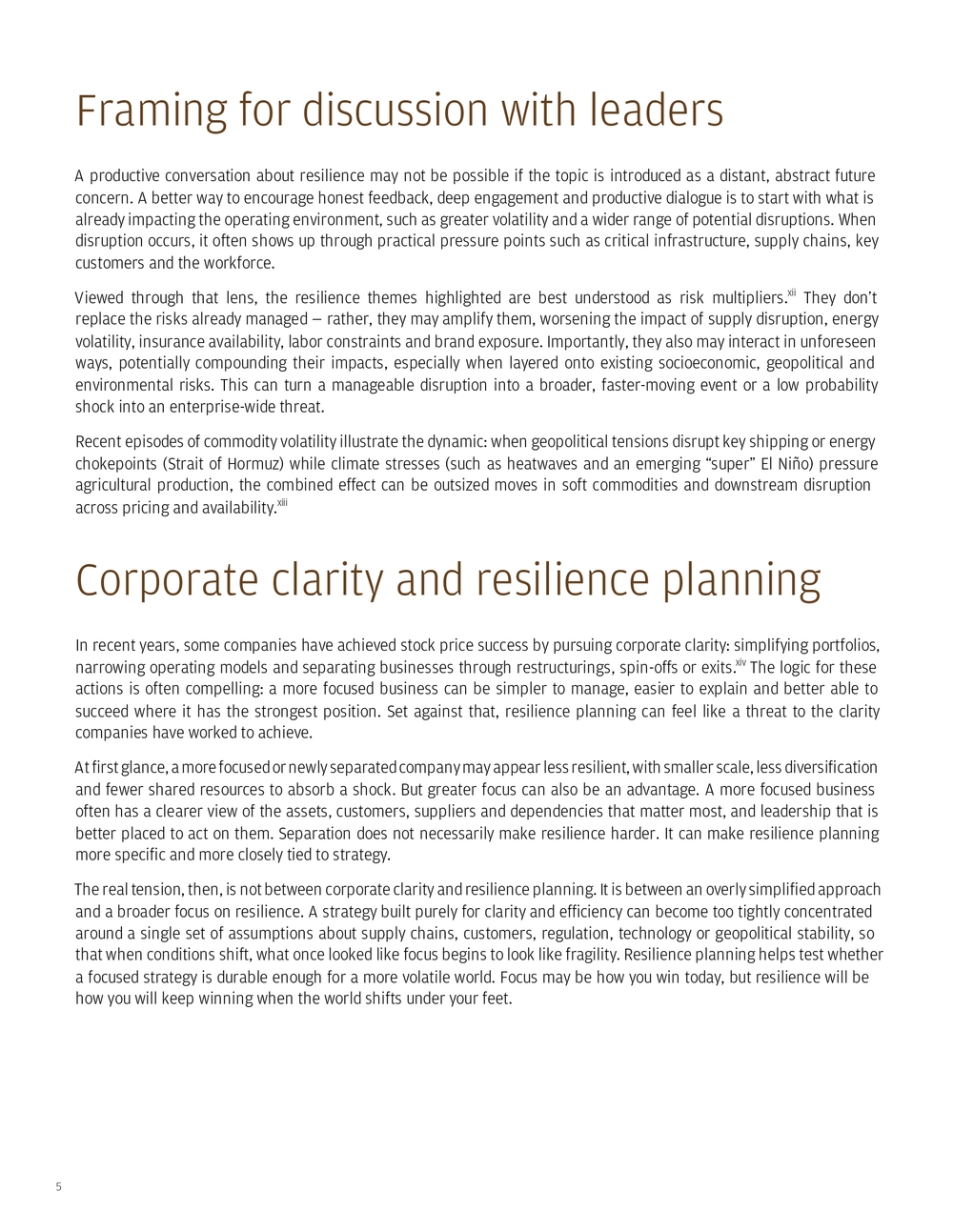
6Hesitancy is a natural human response to ambiguity, social dynamics and perceived downside risk. Research shows that even if people care about a subject, they don’t always discuss it.xv Resilience risk and opportunities can be left unexplored, increasing risk of the company being exposed and less able to leverage any upside advantages. In order to move beyond hesitancy into productive conversations, ask yourself why you’re hesitant to address the topic. • Are you uncertain about the technical details and concerned you’ll be “cross-examined”? • Do you expect someone to dismiss the topic as “not our problem” or “too large to handle”? • Are you worried you’ll be perceived as “negative” rather than “fiducial”? • Are you concerned the topic could expand into an unbounded agenda item? These concerns may be reasonable but also reflect concerns about process risk (how the conversation might unfold), rather than business risk (whether the topic is material and deserves attention from company leadership). When sensitive topics are discussed, it can help to focus less on outcomes and more on being precise and creating space for candid dialogue. The Normalize, Ask Why, Transition framework offers a simple structure to help keep the conversation constructive. It may help to reference it once a sensitive topic has been introduced. Normalize: Acknowledge concerns Normalization defuses defensiveness by separating process from position. It signals that concerns belong in the discussion and are welcome, without judging them. In a group discussion setting, this distinction matters: individuals may disagree on substance, but they still need to be heard and understood. In practice, phrases such as “I understand that concern,” or “I hear you,” acknowledge the challenge while preserving the group’s ability to weigh the evidence and decide.Understanding hesitation A framework for challenging conversations You can reduce process risk by using a clear conversational framework that keeps the discussion anchored on why resilience matters and narrows it down to the specific decisions leadership may need to make. Suggestion “I hear your concerns about discussing extreme weather and geopolitics, and I understand your hesitancy. That is why I think we should address this as a resilience question.”
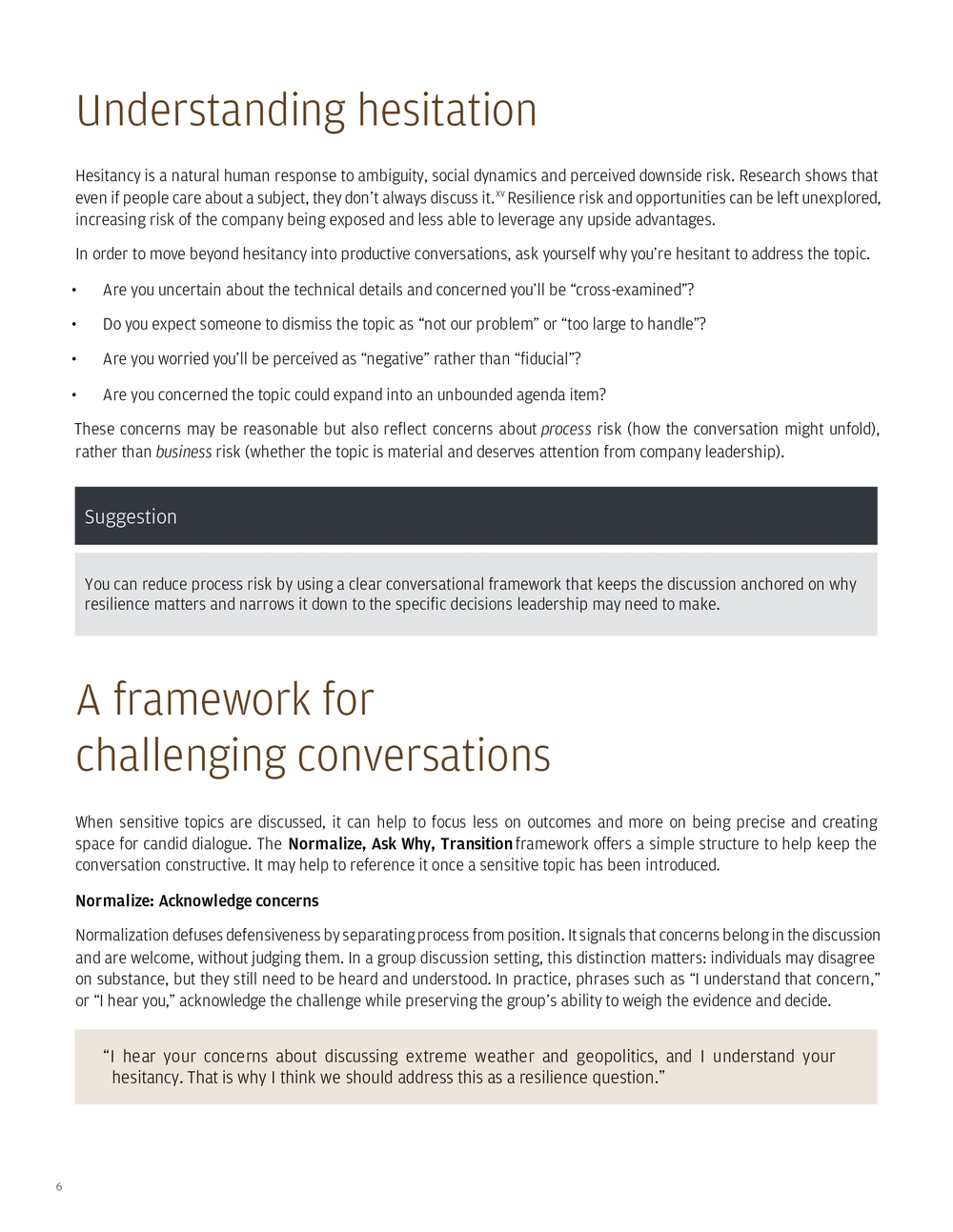
7Ask why: Surface the underlying objections and discover issues to address People may debate positions when the underlying issues are misaligned and a single silver bullet is unavailable: time horizon, risk appetite, confidence in management execution, data uncertainty or concern about reputational exposure. Asking “why” can turn a potential argument/misunderstanding/misalignment into a diagnosis. Then listen closely, because the underlying concern — cost, distraction, uncertainty, potential market reaction, broader second-order impacts or something else — may inform next steps, whether that’s better measurement, tighter governance, scenario work, capital discipline or a clearer external communication plan. Transition: Move from debate to decision Convert concerns into clear, actionable next steps. Effective governance does not require perfect certainty; it needs a disciplined, well-supported decision process to advance what really matters. Objections are not always just factual disagreements. They may reflect reasonable behavioral dynamics: how individuals and groups respond to uncertainty, ambiguity and perceived downside. Below are some common reasons why people may object even to having a discussion and ways to address their concerns. The only goal being to enable important conversations, not to advocate for a preferred outcome. Below are common reasons to discussion, the corresponding (and well-studied) behavioral science term and a suggested response to encourage conversation. “No one else is doing this.” (Social proof) This is the comfort of consensus. If peers aren’t acting, action can often feel unnecessarily costly or risky. While peer behavior may be helpful context, it may miss the point that the risk still exists despite action or lack thereof of others. And there may be significant economic upside to being prepared for shocks even if others are not. Practical responses to common objections “Help me understand what is driving your reluctance to discuss this. What worries you most about addressing resilience now?” “Given those concerns, could we align on what decisions we want management to bring back, by when and with what options?” “If everyone is under-prepared, following the crowd is not safety — it’s shared vulnerability.”
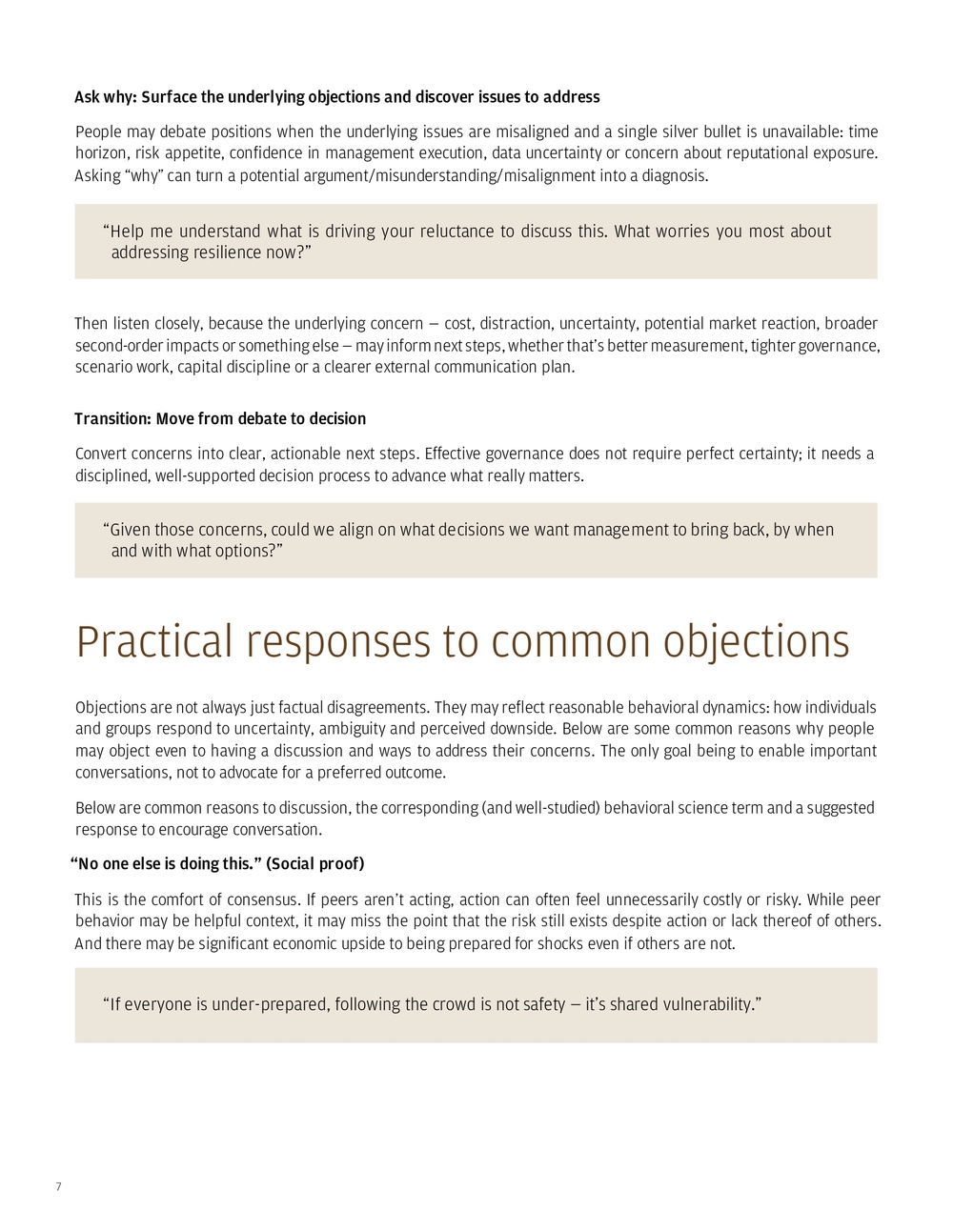
8“Not now — we have more immediate problems.” (Present bias) Immediate fire drills often take precedence over slow-developing risks.xvi But cumulative long-term issues may quickly become critical. It may be difficult for individuals and organizations to allocate attention to uncertain, longer-dated threats,xvii but that’s exactly when good resiliency governance can add value. “This doesn’t impact us.” (Salience) If a risk is not vivid or proximate, it can be discounted. Make it concrete by translating the issue into actual potential failure points and business impacts. “We have successfully navigated crises in the past.” (Status quo bias, overconfidence) Relying on what has worked before can create a false sense of security. Past success is relevant, but this can also lock the organization into familiar playbooks, reducing adaptability and leaving it exposed when the next disruption is different in kind, speed and/or scale.xviii “This is a budget issue, not a strategy issue.” (Mental accounting) When complex risks are put into a narrow bucket, such as “technology,” “energy procurement,” or “policy,” they can be managed as a line item rather than as potential enterprise drivers. This framing understates their possible organization- wide impact and leaves one function responsible for the costs of what may, in reality, be a whole-business issue.“We’ll lose money / reputation / customers.” (Loss aversion) Because most people are naturally averse to loss, they may overweigh the downside risk or costs of immediate action and underweigh the less visible future cost of maintaining the status quo. While changing course may involve risk, it is important to highlight that inaction (until a shock forces decisions under pressure) may also be costly. “The risk of misallocated spending is real. In this case, there’s also the risk of waiting until it’s too late — loss of uptime, loss of insurability, supply disruption and reduced strategic flexibility.” “We don’t need to trade off today’s priorities, but we do need to ensure today’s priorities aren’t quietly increasing tomorrow’s fragility.” “Do we have assets, suppliers, customers or markets whose disruption would impair earnings if disrupted for 30–60 days?” “How have conditions changed since we last saw this problem? How do we see the problem from a new angle?” “How might this subject affect other areas of the business and have enterprise-wide impact? How might decisions across issues lead to synergy?”
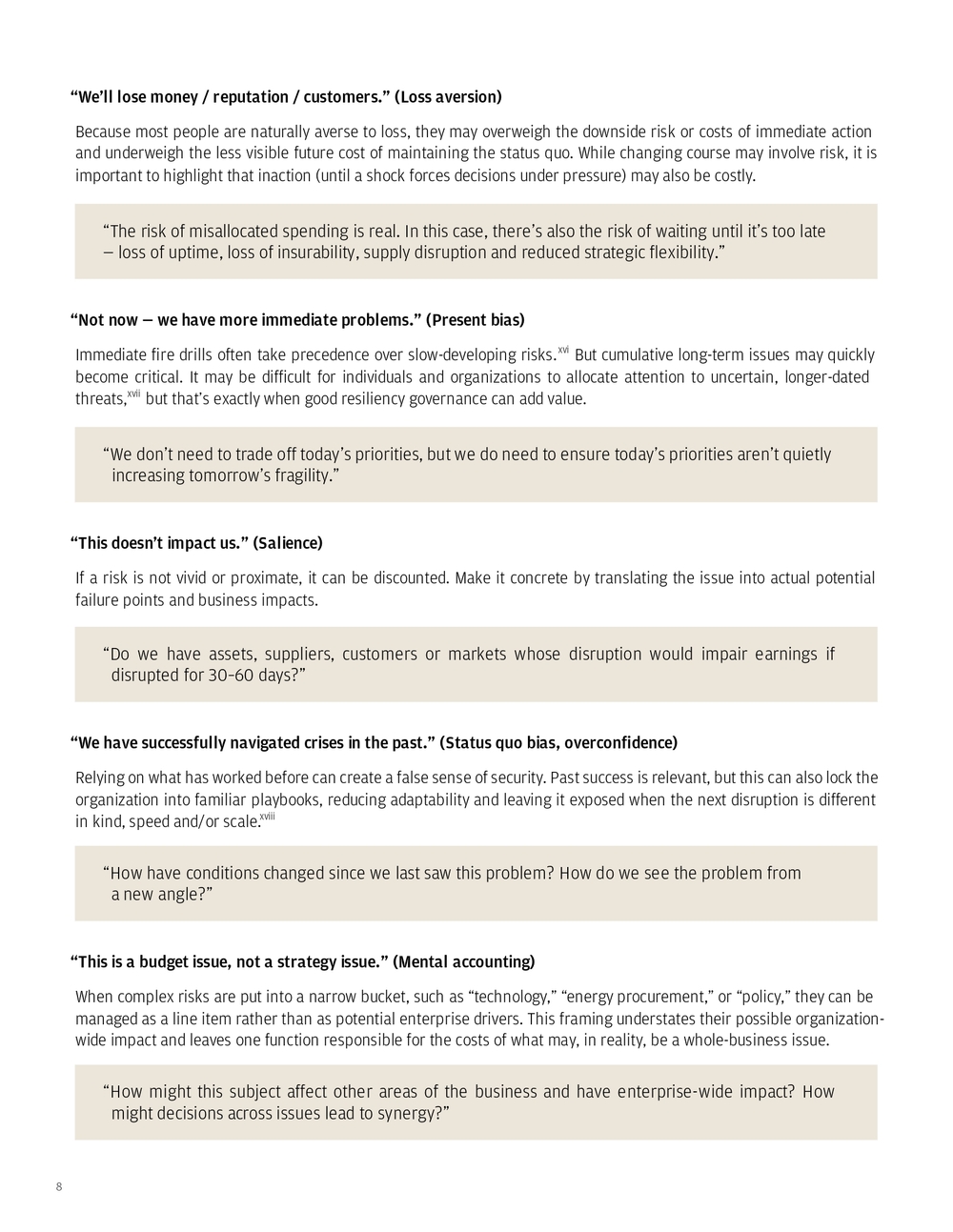
9The goal is to initiate a resilience dialogue among company leadership, including at board level as appropriate, that produces decisions or a framework for decisions amid an uncertain landscape.Call to action: Make it small enough to start, serious enough to matter After you’ve used (your own version of) the Normalize, Ask Why, Transition framework to start the conversation, consider these three concrete requests:
- Ask management to identify the top five resilience exposures that could materially disrupt operations or financial performance across climate, cyber, geopolitics, supply chain/energy/food dependencies or other relevant topics (per the outline and notes), and to map the current mitigants.
- Ask management to deliver three action option sets: (a) no-regrets operational moves to implement now (low-cost and beneficial under almost any scenario), (b) targeted investments with a clear ROI or explicit risk-reduction case and (c) trigger-based contingency actions to pre-plan now and execute only when defined thresholds are met.
- Establish a board cadence as appropriate: a short, recurring resilience review with explicit ownership, so the topic stays governed without consuming the agenda. “Could we agree today on a focused resilience review, the questions we want answered and the decision points we expect to face this year? If we can define that scope, we can move from discussion to governance.”Suggestion Armed with a conversational framework, relevant insights and a focus on what matters most to their organizations, leaders and board members will be well-prepared to lead on this challenging, but necessary, dialogue about resilience that will help set their organizations up for success, no matter what the future may hold.
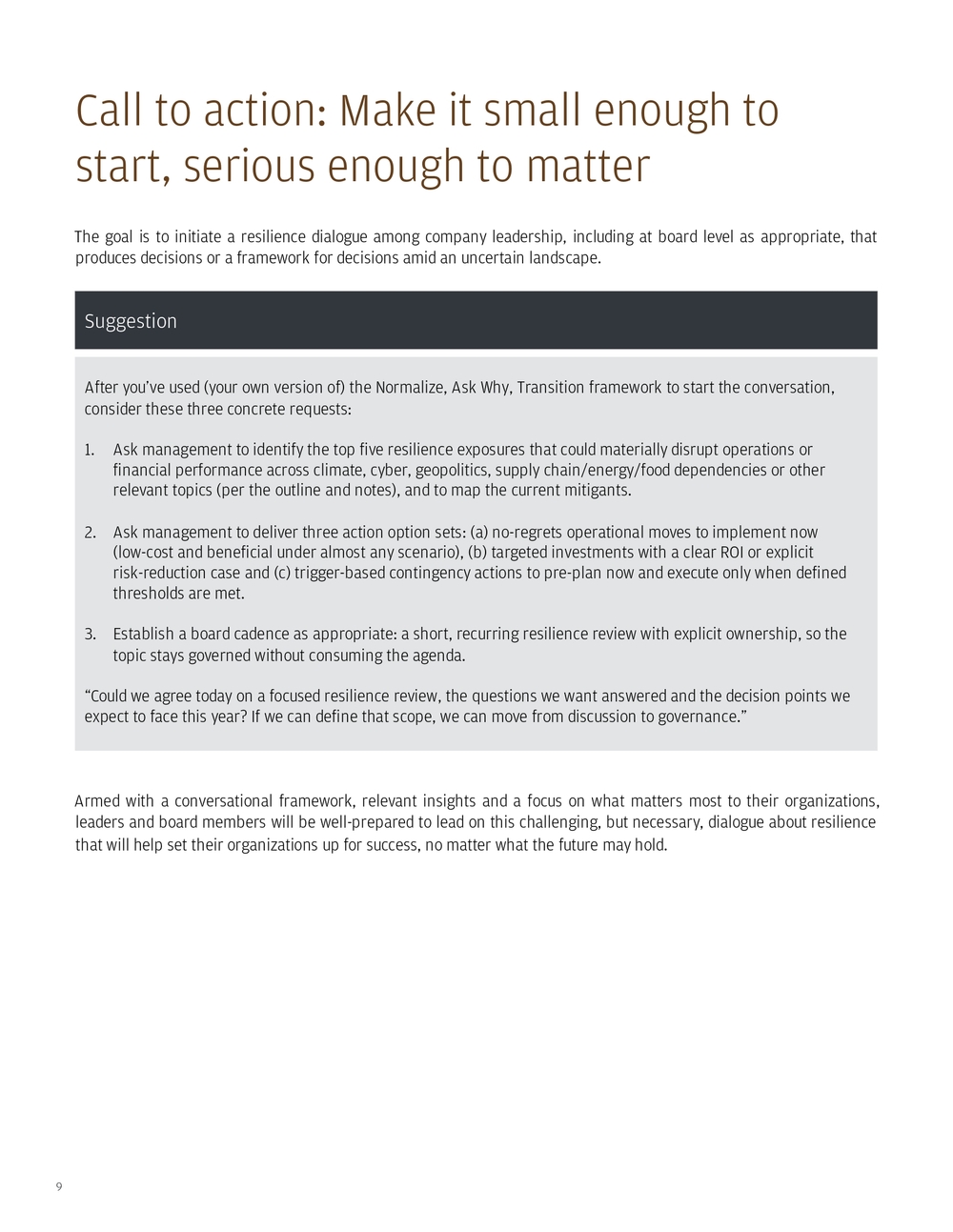
10Appendix: For further reading and exploration Foundational books on behavioral science: • Thinking, Fast and Slow (Kahneman) • Nudge (Thaler and Sunstein) • Predictably Irrational (Ariely) Focused on financial decision-making: • Psychology of Money (Housel) • Happy Money (Norton & Dunn) • Dollars and Sense (Ariely and Kreisler) • Geometry of Wealth (Portnoy) • Aspirational Investor (Chhabra) • Behavioral Investor (Crosby) Some other favorites: • Thinking In Bets (Duke) • How to Change (Milkman) • Your Future Self (Hershfield) • Influence: The Psychology of Persuasion (Cialdini) • Think Again (Grant)
11Dr. Sarah Kapnick Global head of Climate Advisory J.P. Morgan Commercial and Investment Bank Jeff Kreisler Global head of Behavioral Science J.P. Morgan Private Bank Evan Junek Global head of Corporate Advisory J.P. Morgan Commercial and Investment Bank Louise Bennetts EMEA head of Director Advisory Services J.P. Morgan Commercial and Investment Bank Agustina Carcione Vice President, Director Advisory Services J.P. Morgan Commercial and Investment Bank Julian Garcia Vice President, Corporate Advisory J.P. Morgan Commercial and Investment Bank Andrew Tan Analyst, Corporate Advisory J.P. Morgan Commercial and Investment Bank Pratik Shah Analyst, Corporate Advisory J.P. Morgan Commercial and Investment BankAbout the authors
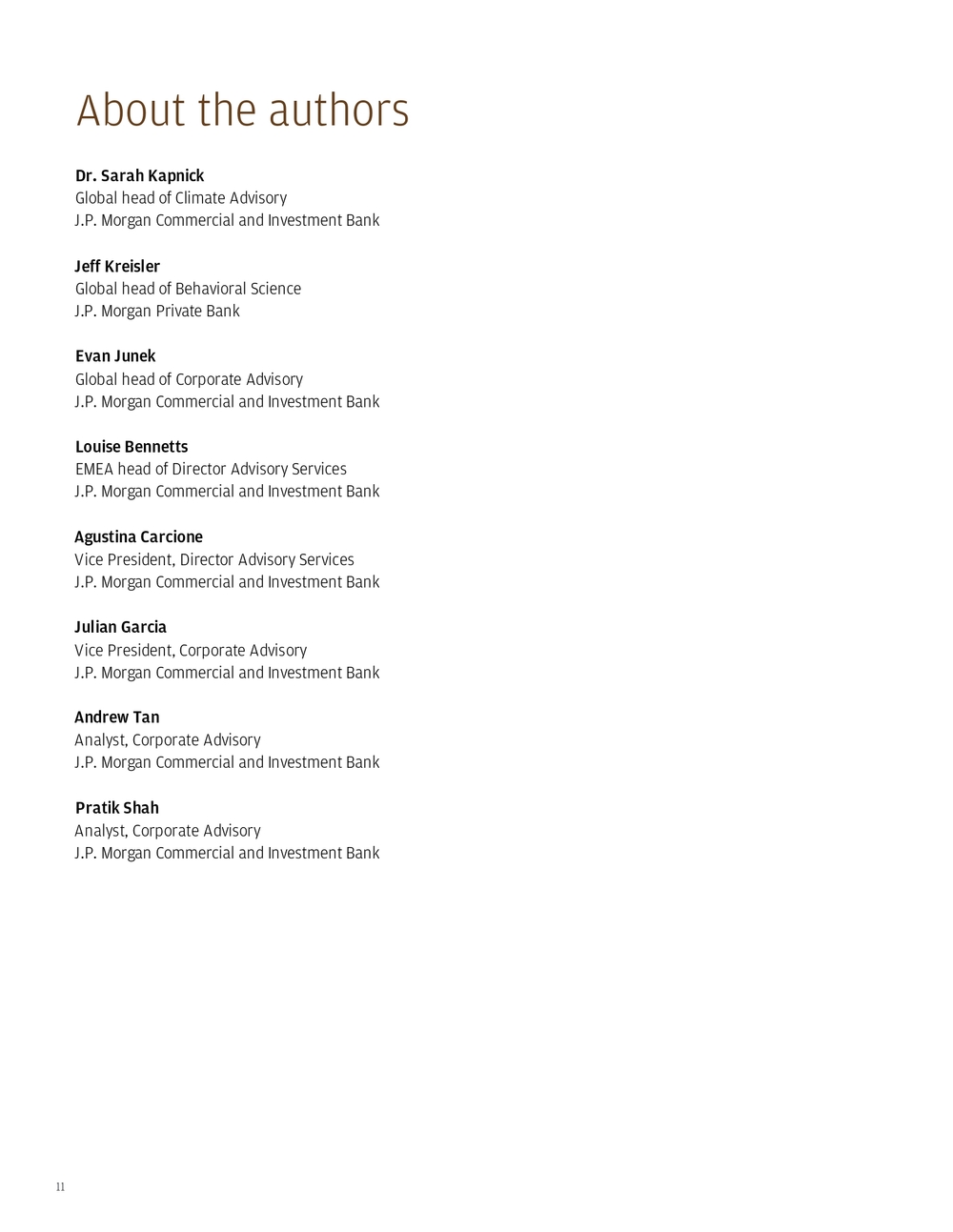
12FOOTNOTES i. https://doi.org/10.1037/xap0000153; https://www.sciencedirect.com/science/article/pii/S1570677X15000684 ii. https://doi.org/10.1177/0275074018799490; https://pubmed.ncbi.nlm.nih.gov/27188246/ iii. https://pmc.ncbi.nlm.nih.gov/articles/PMC3764505/ iv. https://www.jpmorgan.com/insights/sustainability/climate/unlocking-resilience-through-climate-adaptation v. https://library.oapen.org/handle/20.500.12657/22900 vi. https://unctad.org/publication/strait-hormuz-disruptions-implications-global-trade-and-development vii. https://www.cnbc.com/2026/08/14/data-breaches-surge-2026-ai-cyberattacks.html viii. https://wmo.int/media/news/record-breaking-heat-and-extreme-weather-continue ix. https://www.jpmorgan.com/insights/sustainability/climate/food-security-under-pressure x. https://www.jpmorgan.com/insights/sustainability/climate/the-race-to-resilience xi. J.P. Morgan & The DCRO Institute (2025) Scenario Planning session. The NED Climate Governance Workshops (ChangeNOW 2025 Summit), Paris, 24 April xii. https://www.jpmorgan.com/insights/sustainability/climate/future-of-climate-security xiii. https://www.jpmorgan.com/insights/sustainability/climate/food-security-under-pressure xiv. J.P. Morgan, Corporate Advisory: Corporate Compass 2026: State of the Art vs. The State xv. https://www.sciencedirect.com/science/article/abs/pii/S027249441630038X, https://www.sciencedirect.com/science/article/abs/pii/ S0749597819301177 xvi. https://www.jpmorgan.com/insights/sustainability/climate/future-proofing-ports xvii. https://www.jpmorgan.com/insights/sustainability/climate/climate-tipping-points xviii. J.P. Morgan & The DCRO Institute (2025) Scenario Planning session. The NED Climate Governance Workshops (ChangeNOW 2025 Summit), Paris, 24 April
13DISCLAIMER This material (including any commentary, data, trends, observations or the like) has been prepared by certain personnel of JPMorgan Chase & Co. It has not been reviewed, endorsed or otherwise approved by, and is not a work product of, any research department of JPMorgan Chase & Co. and/or its affiliates (collectively, “JPMorgan Chase”, “The firm”, “we”, “our”, or “us”). Any views or opinions expressed herein are solely those of the individual author and may differ from the views and opinions expressed by other departments or divisions of JPMorgan Chase. The information provided in this document reflects its author’s understanding and approach to resilience as at the date of this document and is subject to change without notice. We do not undertake to update any of such information in this document. Any and all transactions (including potential transactions) presented herein are for illustration purposes only. Neither JPMorgan Chase nor any of its directors, officers, employees, or agents shall incur any responsibility or liability whatsoever to any person or entity with respect to the contents of any matters referred herein, or discussed as a result of, this material. This material is for general information only and is not intended to be comprehensive and does not constitute investment, legal, or tax advice and it is not intended as an offer or solicitation for the purchase or sale of any financial instrument or as an official confirmation of any transaction or a recommendation for any investment product or strategy. The opinions and estimates herein constitute the author’s judgment and should be regarded as indicative, preliminary and for illustrative purposes only. No reports, documents or websites that are cited or referred to in this document shall be deemed to form part of this document. Information contained in this document has been obtained from sources, including those publicly available, believed to be reliable, but no representation or warranty is made by the document’s authors or JPMorgan Chase as to the quality, completeness, accuracy, fitness for a particular purpose or non-infringement of such information. Sources of third-party information referred to herein retain all rights with respect to such data and use of such data by JPMorgan Chase herein shall not be deemed to grant a license to any third party. In no event shall JPMorgan Chase be liable (whether in contract, tort, equity or otherwise) for any use by any party of, for any decision made or action taken by any party in reliance upon, or for any inaccuracies or errors in, or omissions from, the information contained herein and such information may not be relied upon by you in evaluating the merits of participating in any transaction. Numbers in various tables may not sum due to rounding. This material does not and should not be deemed to constitute an advertisement or marketing of the Firm’s products and/or services or an advertisement to the public. The use of any third-party trademarks or brand names is for informational purposes only and does not imply an endorsement by JPMorgan Chase or that such trademark owner has authorized JPMorgan Chase to promote its products or services. RESTRICTED DISTRIBUTION: This material is distributed by the relevant JPMorgan Chase entities that possess the necessary licenses to distribute the material in the respective countries. This material and statements made herein are proprietary and confidential to JPMorgan Chase and are for your personal use only and are not intended to be legally binding. Any distribution, copy, reprints and/or forward to others is strictly prohibited. https://www.jpmorgan.com/disclosures ©2026 JPMorgan Chase & Co. All rights reserved.
14